




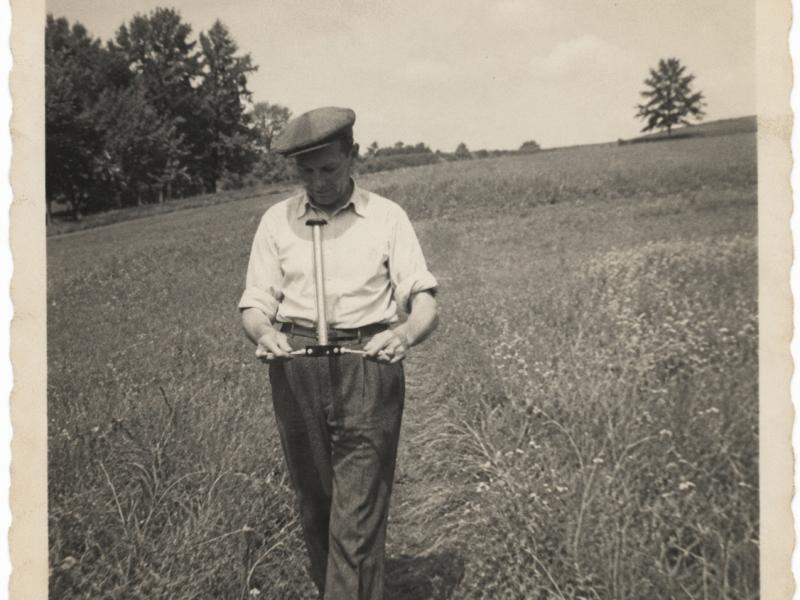

There Is an Invisible Map Beneath Your House, and It Controls Your Sleep
Geobiology and a healthy home
When the Earth disturbs our sleep
There is a question we do not always dare to ask, so much does it unsettle our usual certainties: what if the quality of our sleep depended not only on our thoughts, our screens or our lifestyle, but also, and perhaps above all, on the exact spot where our bed rests on the Earth's crust? The question is not new. In various forms it runs through thousands of years of traditional knowledge, from Chinese feng shui to the builders of Romanesque churches, who methodically sounded the ground before laying the first stone.
Humanity has always known these influences: in China, they were traditionally taken into account when building houses.
It is no coincidence that great places of worship almost invariably stand on sites with strong telluric radiation, a geobiological intuition that our ancestors expressed through their acts of foundation. In the twentieth century, researchers and physicians tried to codify this empirical knowledge.
As early as 1929, Baron Gustav von Pohl, after countless investigations carried out in several localities in Bavaria, established a causal link between illness and geopathic zones.
A few years later, Dr Ernst Hartmann (1915–1992), a German physician, published from the 1950s onwards work that laid the foundations of an approach that many European geobiologists still practise today.
Hartmann, director of the Geobiology Research Circle in Waldkatzenbach, proposed a grid that now bears his name, with a tighter mesh than the diagonal Curry grid. "Illness is a problem of location," he used to say, and geopathic zones occur at the intersections of the grid.
The invisible grid: Hartmann, Curry and the nodes
The geobiology of the home rests on mapping energy structures that the dowsing tradition calls telluric grids. The Hartmann grid is understood as a subtle network of energies spreading across the surface of the Earth, made up of straight energy lines spaced about 2.5 metres apart in the north–south and east–west directions, forming a regular geometric mesh that covers the whole surface of the globe.
The Curry grid, described by Dr Manfred Curry, complements it:
it extends as a diagonal grid running south-west to north-east, each mesh being spaced roughly 3.5 metres apart. What particularly draws the attention of geobiologists are the points where these two grids cross: the nodes.
A geopathic node is a crossing of natural energy grids where emanations are amplified; staying for long periods on such a point can disturb sleep and health.
Doubly negative nodes, where Hartmann and Curry lines cross with an unfavourable polarity,
form what some practitioners call major geopathic zones. A bed placed on one of these nodes therefore becomes, night after night, a place of prolonged exposure, for this is where the human body spends several motionless hours in a state of regeneration that calls for an energetically neutral environment.
To these grids must be added geological faults, underground water veins and zones of telluric fracture, all sources of emissions that dowsing and geobiology take into account in a full diagnosis of a home. Moving underground water in particular generates natural electromagnetic fields whose influence on the etheric body and the subtle bodies is, according to the vibrational tradition, an often overlooked factor of chronic destabilisation.
The body that keeps watch while the mind sleeps
The paradox of geopathic stress lies precisely in its invisibility. Unlike an identifiable source of stress, such as a light that is too bright, a noise or an unsuitable temperature, telluric disturbances fit into none of the categories of ordinary daily life. Yet their signature can be read in our bodies.
The effects most often reported by people living on disturbed zones form a recognisable picture: insomnia or persistently unrefreshing sleep, waking at the same times every night, a feeling of deep exhaustion in the morning despite enough hours of sleep, unexplained muscle tension, night-time anxiety or restless dreams that never seem to let the nervous system relax. Some describe an impression of "never being able to settle" in their own home, a vague, objectless unease that mysteriously fades when they travel or are away. It is no coincidence that this picture closely matches what functional medicine describes as chronic activation of the sympathetic nervous system. The geobiological tradition sees in it the mark of an organism that cannot switch into deep regeneration, because its immediate environment keeps sending it signals to stay alert, imperceptible but uninterrupted. In such cases the body does not really sleep. It keeps watch.
The EDD® Lecher antenna: reading what the eye cannot see
It is precisely in the face of this invisible dimension that the EDD® Lecher antenna shows its full relevance. An instrument of instrumental dowsing based on the principle of frequency resonance, the EDD antenna enables a trained practitioner to identify and measure the vibrational levels of different areas of a home, to detect Hartmann or Curry nodes, to locate underground water veins and to assess the energetic impact of a given spot on the body.
Where other approaches remain in the realm of subjective impression or the simple pendulum, the Dual-E system of the EDD antenna brings a rigour of reading based on precise millimetric frequencies, which makes it possible not only to diagnose a disturbance but also to measure its intensity and follow how it changes over time. It is not a tool for divination: it is an instrument of vibrational measurement, whose precision calls for serious training and a rigorous protocol. For those who wish to learn this approach or deepen their practice, LecherSchool training courses offer a demanding teaching framework, built on a living, progressive transmission, from first handling the instrument to complete geobiological diagnoses in real situations.
Diagnose, correct, live differently
A geobiological diagnosis of a home is not just a map of invisible lines. It is an overall reading of the place that brings together the energy topography of the ground, the orientation of the rooms, the position of living and resting areas and any artificial electromagnetic disturbances, and which leads, when a disturbance is confirmed, to concrete proposals for correction or rebalancing.
The first correction, often the simplest and most effective, is to move the bed. A few dozen centimetres are sometimes enough to move out of a geopathic node and radically transform the quality of sleep. Other situations call for vibrational correctors, space harmonisers, or deeper work on the whole energy field of the living space. In every case, the approach rests on a fundamental principle that geobiology shares with the great traditions of the art of living, from Indian Vastu shastra to Taoist feng shui: human beings are not separate from their environment. They move through it, breathe it, and carry its memory in their cells.
This vision is in no way a naive belief. It belongs to a long line of thinkers who recognised a vibrant, intelligent dimension in matter. In the sixteenth century Paracelsus already held that man is the mirror of the cosmos and that his health depends on the harmony or dissonance between his own being and the environment around him. The Emerald Tablet, the founding text of the Hermetic tradition, states in its most famous formula this relationship of correspondence between what is above and what is below, and one might add, in the spirit of geobiology: between beneath and above, between the ground that bears and the body that rests.
Towards a conscious home
Taking care of one's home, in the geobiological sense, means exercising a form of discernment that our age has largely forgotten. We invest in our mattresses, our blackout curtains and our sleep-tracking apps, yet we almost always ignore the first question: where exactly does that mattress lie? On which node, which vein, which silent fracture?
The EDD Lecher antenna makes this questioning practical. It turns an ancient intuition into a precise, reproducible and teachable reading protocol. And that is perhaps its most decisive contribution: not to convince, but to show. To make visible, or rather measurable, what the body has vaguely felt for years without being able to name it.
To go further in understanding this instrument and its applications in geobiology, the LecherSchool YouTube channel offers in-depth content drawn from Éric Daub's direct experience in the field. And for those who wish to acquire the instrument or discover all the resources we offer, the VED-DISTRI shop is the natural gateway into this world.
To sleep, after all, is to agree to make oneself vulnerable. It is to entrust one's body to a place, let go of conscious vigilance, and allow the deepest layers of one's being to carry out their work of restoration. That trust deserves to rest on something solid: on the certainty, or at least the documented conviction, that the place that welcomes us every night is indeed an ally and not a silent source of exhaustion.
Geobiology does not promise miracles. It offers rigorous, instrument-based attention, rooted in an age-old tradition and refined by decades of field practice. It reminds us that the home is not a neutral backdrop but a living field, crossed by forces that we can learn to read, understand and harmonise.
It is this promise, sober and profound, that underpins the work of LecherSchool and VED-DISTRI: to place in the hands of conscious practitioners the instruments and knowledge needed to inhabit the Earth intelligently, and at last, perhaps, to truly rest there.
From measuring a place to its secret harmony
So far we have travelled the ground of detection: that ancient faculty, handed down from the water diviners of our countryside to today's practitioners of geobiology, which consists in perceiving, with the EDD® Lecher antenna or the movement of the pendulum, the invisible tensions of a lived-in space. Understanding a place is already a great deal: it means recognising the underground water veins, the faults and the telluric grids that run through our homes without ever showing themselves, yet whose influence is felt in troubled sleep, chronic fatigue, or that vague unease no one can explain.
But detection, however precise, is only the first half of the journey. It names the disorder; it does not resolve it. Alongside this mapping of the subtle there is another path, more discreet and more demanding too: that of harmonisation. No longer simply knowing what disturbs a place, but restoring in it a form of harmony, a true resonance between the space and those who live in it. This is where the wika come in, about which I will say little for now, since the subject deserves a full treatment of its own rather than a hasty sketch.
Let us simply say, to whet the appetite without betraying the subject, that where the Lecher antenna lets you read a place as you would read a musical score, the wika are closer to the instrument that plays it in the right tempo: a gesture of tuning, in short, rather than one of measurement. This distinction between detecting and harmonising is not new: the traditions of geobiology have always sensed it, without always expressing it this clearly.
But I will stop here, for this road, that of the wika and true harmonisation, deserves to be travelled slowly, with all the attention it calls for. I will tell you about it soon, in a chapter devoted entirely to it.
Share this content






By Nelson 09/08/2026 09:15:00
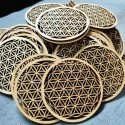
Dans ma chambre mon lit est placé dans le sens du réseau hartmann pas de réseaux curry mais traverser par une veine d'eau en diagonale celles-ci je l'ai suivie et à 80 m de la chambre un poteaux électrique avec un câble de prise de terre enfouis juste au dessus de la veine que j'ai déplacé et mis en zone neutre et pas de changement dans le sommeil malgré que la veine est devenu positive Le matelas de notre lit est en mémoire de forme et le pendule tourne en négatif ce matelas est récent et à une certaine valeur que faire pour isolé ce dernier ? En plus j'ai déposé une pastille fleur de vie sous le lit au dessus de la veine d'eau Merci pour votre réponse
View replies (1) -
By Eric DAUB Author 09/08/2026 11:11:42
Cher Nelson, Avant d'envisager quelque intervention que ce soit, il convient, ainsi que le veut la prudence de notre art, d'établir d'abord le bilan C/T et le bilan E/A : c'est de cette lecture attentive des forces en présence que dépendra tout le reste, et qu'on pourra véritablement circonscrire les champs d'action sur lesquels il faudra agir. Se précipiter vers une solution avant d'avoir posé ce diagnostic reviendrait à soigner un symptôme sans avoir consulté le corps tout entier. Cela étant posé, la première chose à considérer sera de regarder si la chambre peut être réorganisée, de sorte à limiter les interactions entre le réseau d'eau et les dormeurs, car bien souvent, un déplacement du lit ou une redistribution de l'espace suffit à apaiser ce qui, autrement, viendrait perturber le sommeil nuit après nuit. Si, en revanche, cette réorganisation s'avère impossible dans la configuration actuelle des lieux, il restera alors la solution du WIKA Bleu et ou Noir, pensé précisément pour composer avec les perturbations telluriques lorsque l'espace ne se prête pas à d'autre arrangement.