
Search on blog
Latest blog posts
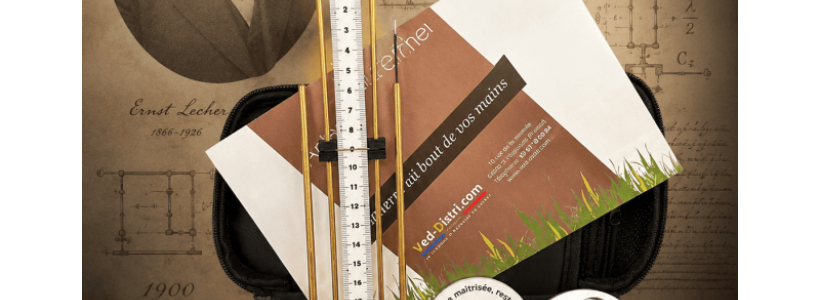
Few instruments have a history so thoroughly documented, and yet so little known by those who use them every day. It all began in Vienna in 1888, when Austrian physicist Ernst Lecher devised a standing-wave measuring device that has carried his name ever since: two parallel conducting wires, joined in a closed circuit by a movable shunt, capable of precisely revealing the wavelength and frequency of an electromagnetic signal. This experiment, published in 1890, unknowingly laid the foundations for an instrument destined for a path far removed from physics laboratories. Decades later, professor Walter Kunnen, based in Ghent, extended its reach into the living world, opening the way to what the Lecher antenna would become in the hands of twentieth-century practitioners.
This category gathers our articles devoted to that lineage: Ernst Lecher's original physics, Walter Kunnen's biological transposition, and the twenty years of continuous evolution that led to the design of the EDD® antenna. Here we also trace, with the same commitment to accuracy, the legend and the documented history behind our models — such as the Ernst, created as a direct tribute to this heritage. Understanding where a tool comes from is often the best way to understand its true reach.
2 posts in the category: History & Foundations
-

The Lecher Antenna Wars: It All Comes Down to the Rear Loop
Published : 14 August 2026 | Categories : History & Foundations , Practice & Protocols , Workshop Life & CommunityWe removed the rear loop a holdover from antennas built at the end of the last century to preserve a pure sine wave on the programmed frequency. A deliberate choice, made without disparaging other
-
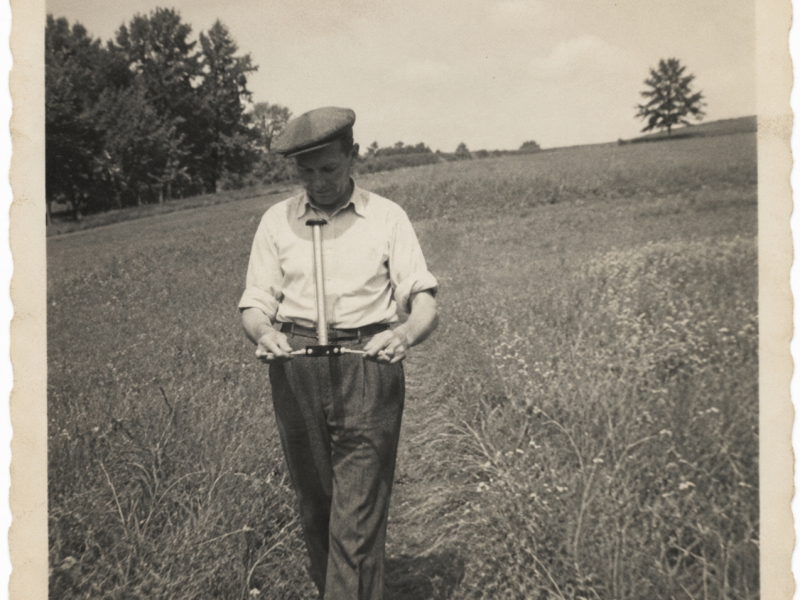
The Lecher RETRO® Antenna: The Origins of Antennas from the Late 20th Century
Published : 14 August 2026 | Categories : History & Foundations , Workshop Life & CommunityThe RETRO® Antenna: the silhouette of its Viennese origins, modern precision, brass, DUAL-E mode, and Alsatian craftsmanship—to reconnect with the art of craftsmanship without compromising on accuracy